
What Is Cagrilintide Peptide?
Cagrilintide is a synthetic, long-acting analogue of amylin developed by Novo Nordisk. Amylin is a 37 amino acid hormone that pancreatic beta cells release together with insulin after a meal. Native amylin is cleared within minutes and tends to aggregate, which limits its use as a research tool. Cagrilintide was engineered to avoid both problems: its sequence is modified for stability, and a fatty acid side chain lets it bind albumin, giving it a half-life of around a week in published studies.
An earlier amylin analogue, pramlintide, has a short duration of action. Cagrilintide's long half-life is what made weekly research protocols practical, and it is why the cagrilintide peptide now appears so often in metabolic research alongside incretin compounds.
How Cagrilintide Works: Amylin Mechanism of Action
Cagrilintide acts on amylin receptors, which are formed when the calcitonin receptor pairs with a receptor activity-modifying protein (RAMP), and it also activates the calcitonin receptor itself. That is why it is sometimes described as a dual amylin and calcitonin receptor agonist.
- Satiety signalling. Amylin receptors in the brainstem, particularly the area postrema, are involved in meal-ending signals.
- Gastric emptying. Amylin slows the rate at which the stomach empties after a meal.
- Glucagon. Amylin suppresses glucagon release after meals, complementing the action of insulin.
So is cagrilintide a GLP-1? No. It does not act on the GLP-1 receptor at all. It works through a separate hormonal pathway, which is exactly why researchers study it together with GLP-1 and dual incretin agonists.
Cagrilintide with Retatrutide, Tirzepatide and Semaglutide
Because amylin and incretin hormones act through different receptors, combination research is the main reason labs order cagrilintide.
| Compound | Pathway | Receptor targets |
|---|---|---|
| Cagrilintide | Amylin | Amylin and calcitonin receptors |
| Semaglutide | Incretin | GLP-1 |
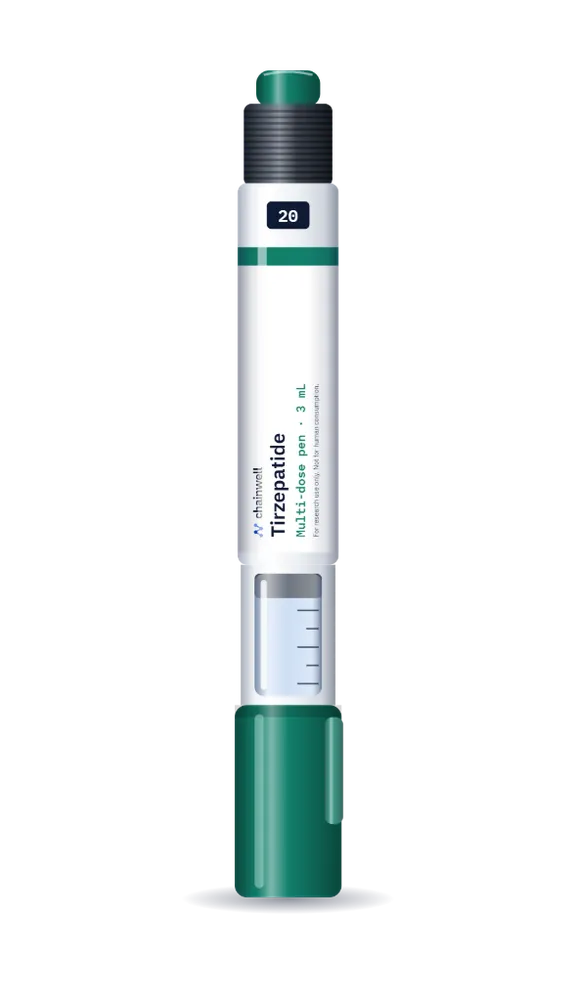
| Tirzepatide | Incretin | GIP and GLP-1 |
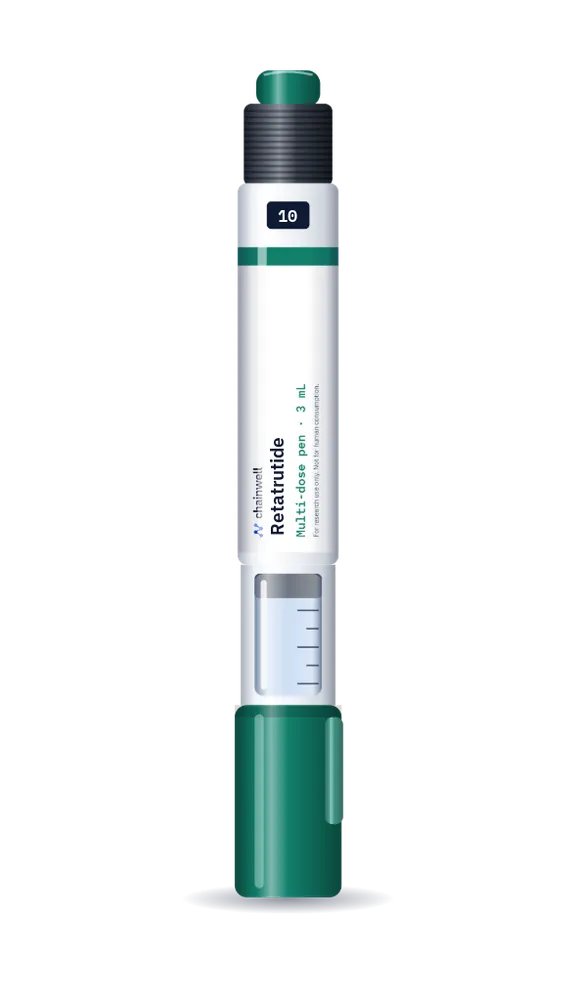
| Retatrutide | Incretin and glucagon | GIP, GLP-1 and glucagon |
The pairing with the most published data is cagrilintide with semaglutide, studied in large clinical programmes under the name CagriSema. Research labs also pair cagrilintide with tirzepatide or retatrutide to compare an amylin pathway against dual and triple incretin agonists. Cagrilintide vs retatrutide is not a like-for-like comparison: they act on entirely different receptors, and they are more often studied together than against each other. See the full range of metabolic research peptides.
Cagrilintide Clinical Trials and Published Research
Cagrilintide has been studied in phase 2 and phase 3 clinical programmes run by its developer, both alone and combined with semaglutide, with results published in journals including The Lancet and the New England Journal of Medicine. It remains an investigational compound. Browse the citations, with links to each paper, in our cagrilintide research library.
Cagrilintide 5mg and 10mg Vials
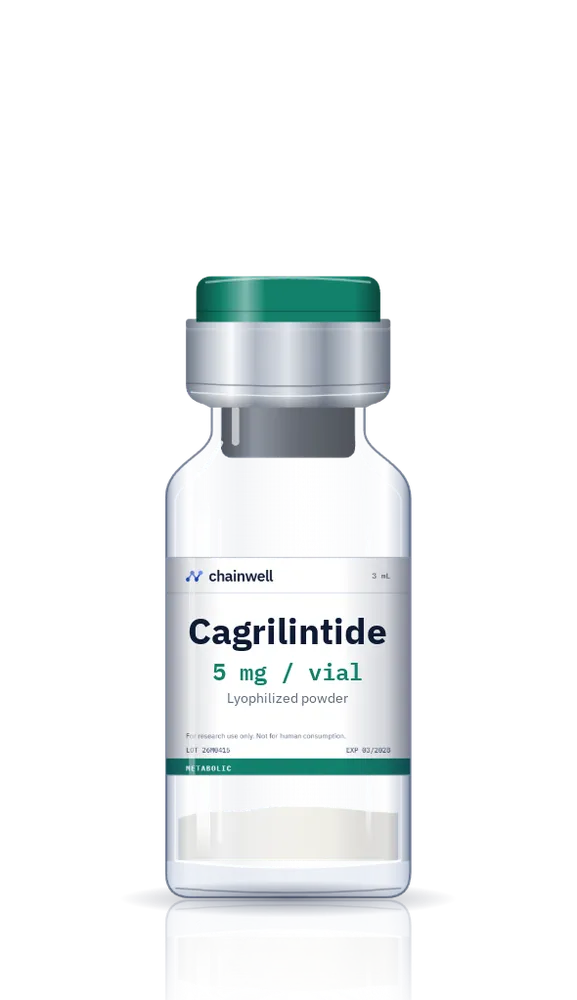
Both sizes contain the same cagrilintide peptide, from the same production process and to the same specification, sealed in the same 3 mL glass vial. Choose by the scale of your work.
Cagrilintide 5mg
The cagrilintide 5mg vial is the smallest commitment and the size we suggest for a first order. It suits method development, pilot studies and labs trialling cagrilintide alongside an incretin compound for the first time, while the protocol may still change.
A smaller fill is also easier to use completely inside the 28 day window after reconstitution, so less material is wasted if work pauses. Like every Chainwell Peptide vial, it carries a lot number matched to an independent certificate of analysis.
Cagrilintide 10mg
The cagrilintide 10mg vial is built for ongoing research. It holds twice the peptide of the 5mg vial in a single lot, so a longer run of work draws on one certificate of analysis instead of two, and it costs less per milligram.
Choose the 10mg vial once your protocol is settled and you know the reconstituted vial will be used within 28 days. Labs pairing cagrilintide with retatrutide or tirzepatide over a longer study usually find it the more practical size.
Buy Cagrilintide in Australia
Chainwell Peptide supplies cagrilintide for sale in Australia to laboratories and independent researchers. When you buy cagrilintide online from any supplier, check that the fill is stated in milligrams, the vial carries a lot number and the certificate of analysis for that lot is available. Ours can be checked on the COA lookup page.
- Same-day dispatch on orders paid before 3pm AEST on a business day.
- Australia-wide delivery by standard or express post, covering Melbourne, Sydney, Brisbane, the Gold Coast, Perth and Adelaide.
- PayID or bank transfer, with your order number as the payment reference.
The current cagrilintide cost for each vial size is shown at the top of this page, with GST included, and shipping is charged once per order.
Cagrilintide Specifications
| Compound | Cagrilintide |
|---|---|
| Class | Long-acting amylin analogue (amylin and calcitonin receptor agonist) |
| Vial sizes | 5mg, 10mg |
| Form | Lyophilized (freeze-dried) powder |
| Container | 3 mL clear glass vial, rubber stopper, flip-off cap |
| Label | Product, strength, lot number, expiry, research-use statement |
| Testing | Identity and purity by an independent laboratory, per lot |
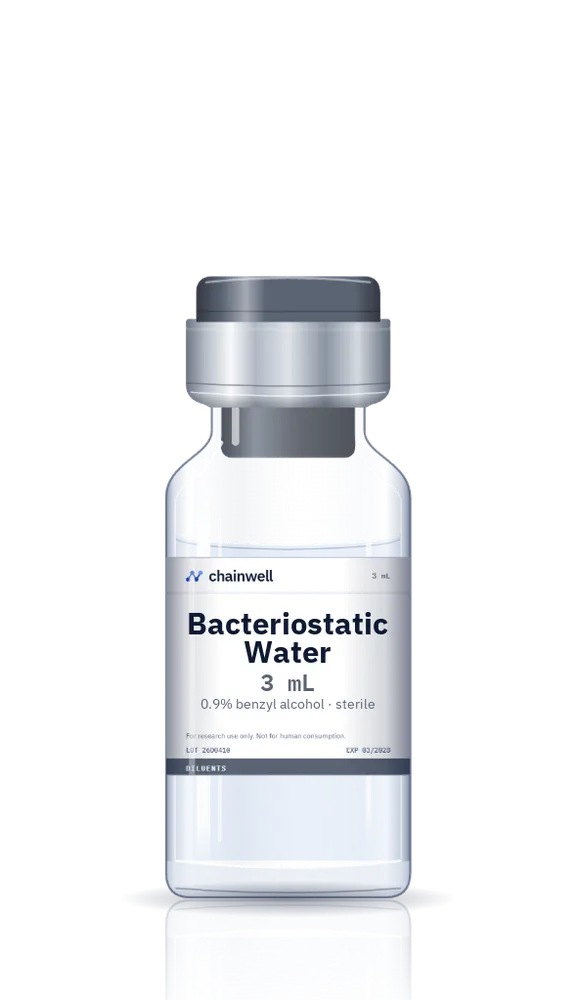
| Diluent | Bacteriostatic water, sold separately |
| Storage | Minus 20 °C long term, 2 to 8 °C short term, protect from light |
Reconstitution and Storage
Cagrilintide arrives as a dry cake and is dissolved in bacteriostatic water before use. Add the water slowly down the inside wall of the vial and swirl gently until clear. Keep unopened vials frozen at minus 20 °C, or refrigerated for use within a few weeks, and use a reconstituted vial within 28 days. Our reconstitution guide and calculator covers handling for any vial size.
Research Use Only
Cagrilintide is an investigational compound and is not approved by the Therapeutic Goods Administration for any therapeutic use. Chainwell Peptide sells it strictly for laboratory and in vitro research. It is not for human or veterinary use, and we do not provide dosing advice. By ordering you agree to our terms and conditions and research use only statement.
Cagrilintide tools and guides
Cagrilintide FAQ
What is cagrilintide peptide?
+
Cagrilintide is a synthetic, long-acting analogue of the pancreatic hormone amylin, developed by Novo Nordisk. A fatty acid side chain gives it a half-life of around a week. It is used in metabolic research, often in combination with incretin compounds, and Chainwell Peptide supplies it in 5mg and 10mg research vials.
Is cagrilintide a GLP-1?
+
No. Cagrilintide does not act on the GLP-1 receptor. It is an amylin analogue that activates amylin and calcitonin receptors, a separate hormonal pathway from GLP-1. That difference is why it is so often studied together with GLP-1 and dual incretin agonists such as semaglutide and tirzepatide.
What does cagrilintide do?
+
Cagrilintide mimics amylin, a hormone released with insulin after meals. In research models, amylin receptor activation is linked to satiety signalling in the brainstem, slower gastric emptying and reduced glucagon release after meals. These mechanisms make it a tool for studying the amylin pathway alongside incretin pathways.
Where can I buy cagrilintide in Australia?
+
You can buy cagrilintide in Australia from Chainwell Peptide in 5mg and 10mg lyophilized research vials. Each vial carries a lot number matched to an independent certificate of analysis, and orders paid before 3pm on a business day ship the same day by standard or express post.
What is the difference between cagrilintide and retatrutide?
+
Cagrilintide is an amylin analogue acting on amylin and calcitonin receptors. Retatrutide is an incretin-based triple agonist of the GIP, GLP-1 and glucagon receptors. Because they act on different pathways, research more often combines the two than compares them directly. Both are available from Chainwell Peptide.