Peptide reconstitution calculator
Peptide dosage calculators by compound
Each of these opens the calculator preset to that peptide, with a reconstitution chart for its vial sizes:
How the peptide calculator works
The calculator does three simple steps of arithmetic:
- Concentration. Peptide in the vial (mg) divided by the diluent you add (mL) gives the concentration in mg per mL.
- Volume to draw. The amount you want per draw, divided by that concentration, gives the volume in mL.
- Units on the syringe. On a U-100 insulin syringe, 1 mL is 100 units, so the volume in mL multiplied by 100 gives the reading on the syringe.
Amounts in micrograms (mcg) are converted to milligrams first: 1,000 mcg is 1 mg.
Worked example
A 10mg vial reconstituted with 2 mL of bacteriostatic water has a concentration of 5 mg per mL. To draw 0.5 mg you need 0.1 mL, which is 10 units on a U-100 insulin syringe. The same vial holds 20 draws of that size.
| Vial | Water added | Concentration | 10 units (0.1 mL) holds |
|---|---|---|---|
| 5 mg | 1 mL | 5 mg/mL | 0.5 mg |
| 5 mg | 2 mL | 2.5 mg/mL | 0.25 mg |
| 10 mg | 1 mL | 10 mg/mL | 1 mg |
| 10 mg | 2 mL | 5 mg/mL | 0.5 mg |
| 10 mg | 3 mL | 3.33 mg/mL | 0.33 mg |
| 50 mg | 2 mL | 25 mg/mL | 2.5 mg |
Choosing how much water to add
The peptide in the vial never changes; only the concentration does. Less water gives a stronger solution and smaller volumes to draw. More water spreads the peptide over more units, which makes small amounts easier to measure accurately. A standard 3 mL vial holds about 3 mL of liquid. If the calculator shows fewer than 2 units per draw, adding more water will make measuring easier; if it shows more than 100 units, the draw is larger than a 1 mL syringe holds.
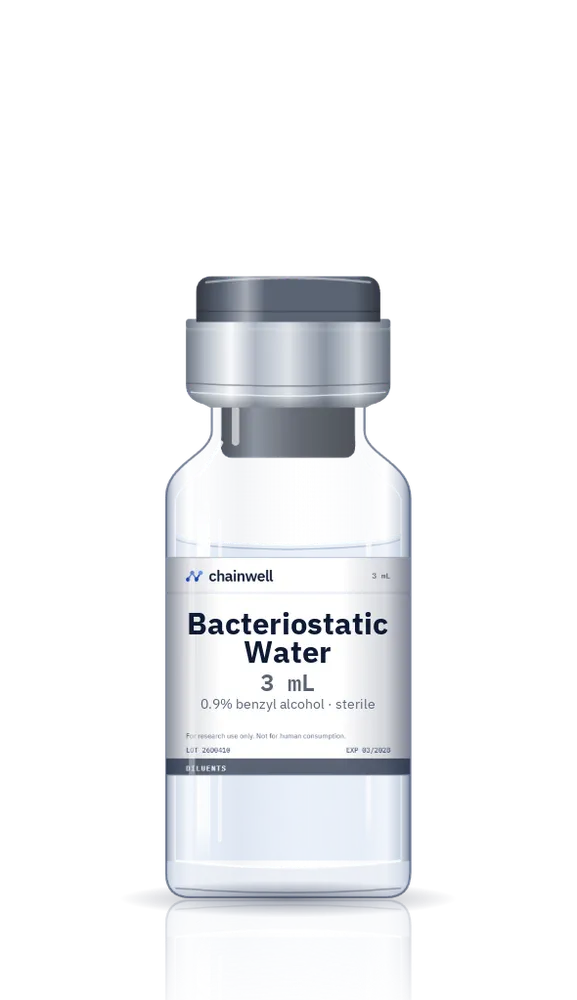
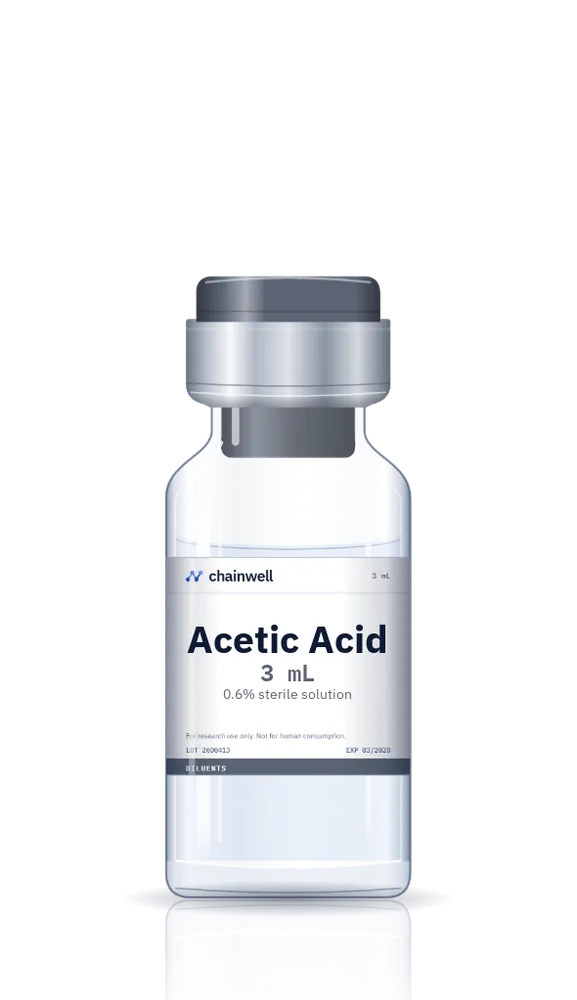
Most peptides are reconstituted with bacteriostatic water. A few, such as IGF-1 LR3, are often dissolved in 0.6% acetic acid instead. Our step-by-step reconstitution guide covers the technique.
Peptide calculator questions
How many units is 0.1 mL?
+
On a U-100 insulin syringe, 0.1 mL is 10 units, and 1 mL is 100 units.
How do I convert mcg to mg?
+
Divide by 1,000: 500 mcg is 0.5 mg, and 250 mcg is 0.25 mg. The calculator does this for you when you choose mcg.
How much bacteriostatic water should I add to a peptide vial?
+
The water sets the concentration, not the amount of peptide. Choose a volume, usually 1 to 3 mL in a standard vial, that puts the amounts you measure between about 10 and 100 units on a U-100 syringe, where the markings are easiest to read.
Does the calculator give dosing advice?
+
No. It performs volume and concentration arithmetic for laboratory measurement only. Our peptides are supplied for research use, not for human or veterinary use.