
What Is Bacteriostatic Water?
Bacteriostatic water is sterile water containing 0.9% benzyl alcohol. The benzyl alcohol is bacteriostatic: it does not kill bacteria outright, but it stops them from multiplying. That matters because every time a needle passes through a vial's stopper there is a small chance of introducing contamination. In plain sterile water, anything introduced can grow; in bacteriostatic water, it cannot. That is what makes bac water suitable for multi-use vials.
What is bacteriostatic water used for? In research, it is the standard diluent for reconstituting lyophilized peptides, the freeze-dried powders almost every peptide is supplied as. It dissolves the peptide without changing it, and it keeps the reconstituted vial usable across several draws over a period of weeks.
Bacteriostatic Water for Peptides
Almost every lyophilized peptide in our range, from retatrutide and BPC-157 to GHK-Cu, is reconstituted with bacteriostatic water. To mix peptides with bacteriostatic water, let both vials reach room temperature, wipe both stoppers with an alcohol swab, draw the water with a U-100 insulin syringe and add it slowly down the inside wall of the peptide vial. Swirl gently until clear; do not shake, as that can damage the peptide chain.
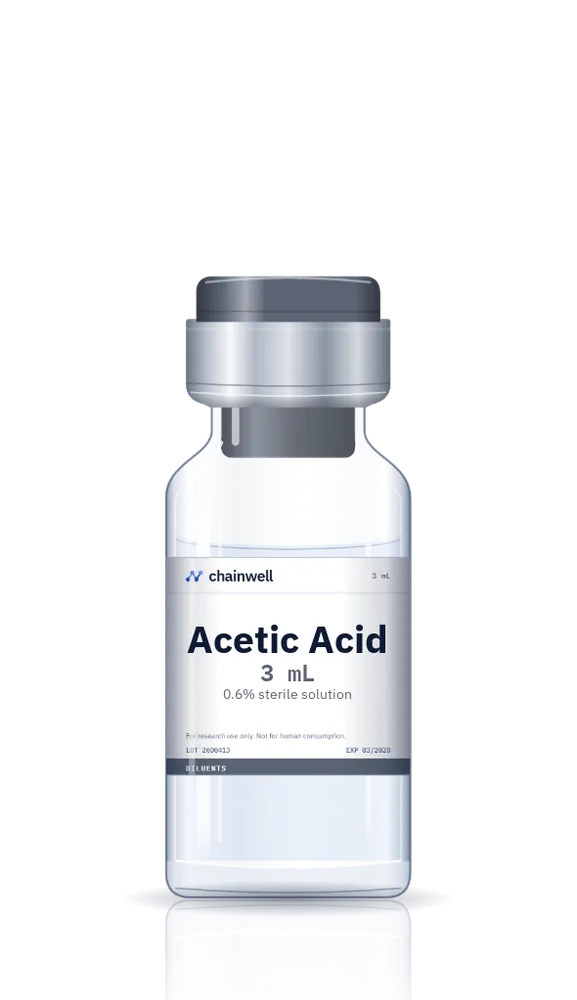
A few peptides are an exception. IGF-1 LR3 is often reconstituted in dilute acid instead, which is why we also stock 0.6% acetic acid. Our step-by-step peptide reconstitution guide and calculator covers the whole process.
How Much Bacteriostatic Water to Mix With a Peptide
How much bacteriostatic water to add depends only on the concentration you want: the peptide in the vial is fixed, and the water sets how much of it each millilitre holds. The table shows common combinations. It is simple arithmetic, peptide mass divided by water volume, not dosing advice.
| Peptide in vial | 1 mL water | 2 mL water | 3 mL water |
|---|---|---|---|
| 5mg (for example DSIP 5mg) | 5mg per mL | 2.5mg per mL | 1.67mg per mL |
| 10mg (for example retatrutide 10mg, BPC-157 10mg) | 10mg per mL | 5mg per mL | 3.33mg per mL |
| 20mg (for example retatrutide 20mg) | 20mg per mL | 10mg per mL | 6.67mg per mL |
So the answer to how much bacteriostatic water to mix with retatrutide 10mg, or with 10mg of BPC-157, is whatever volume gives the concentration your protocol specifies; 2 mL giving 5mg per mL is a common round figure. A 3 mL peptide vial holds at most about 3 mL of water.
Bacteriostatic Water 3 mL, 10 mL and 30 mL
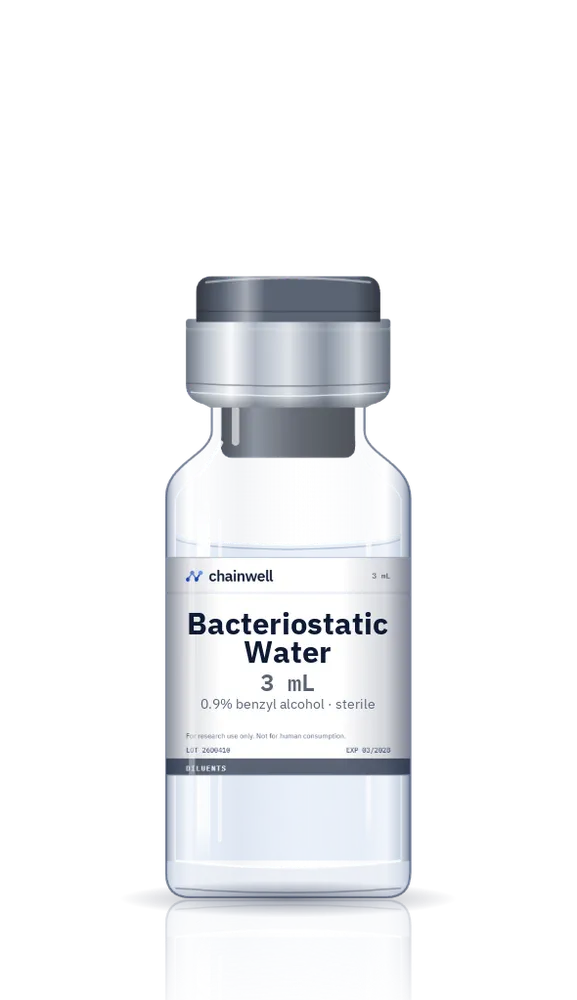
We stock bacteriostatic water in three sizes, all the same 0.9% benzyl alcohol formulation in clear glass vials with a grey flip-off cap, the colour we use across our water and supplies range. Choose by how many peptide vials you prepare within 28 days of opening.
Bacteriostatic Water 3 mL
The 3 mL vial holds enough bacteriostatic water to reconstitute one peptide vial, with a little to spare. It suits a first order, a single peptide, or anyone who wants a fresh, unopened vial of diluent for each new peptide vial rather than sharing one bottle across several.
It is the size included in our GHK-Cu Starter Kit and Retatrutide Starter Kit, and the one we recommend alongside a single vial order.
Bacteriostatic Water 10 mL
Bacteriostatic water 10 mL is the size most researchers search for. At 2 mL per peptide vial, a 10 mL vial reconstitutes several peptide vials from one bottle, which suits labs working with two or three compounds at once.
Because every draw from the bottle counts toward the same 28 day window, the 10 mL size works best when you will reconstitute those vials within about four weeks of first opening it.
Bacteriostatic Water 30 mL
The 30 mL vial is for regular, higher-volume work: the lowest cost per millilitre and the fewest bottles to track. It suits labs that reconstitute peptides every week.
The same 28 day guidance applies after the first puncture, so choose 30 mL only if you will use that volume in that time. If you reconstitute occasionally, several 3 mL or 10 mL vials waste less.
Bacteriostatic Water and Syringes
Every size of bacteriostatic water is also available with one U-100 insulin syringe: 3 mL + 1 syringe, 10 mL + 1 syringe and 30 mL + 1 syringe. The syringe is a sterile, single-use 1 mL U-100 syringe with a 29G needle, the same one we sell as the U-100 insulin syringe, and it is the tool you need to draw bac water from its vial and add it to a peptide vial.
The bundle suits a first order, when you have no syringes on hand, or anyone who wants the water and needle to arrive together. If you already hold syringes, or need several per vial, choose the water on its own and add syringes separately. Bacteriostatic water and needles are packed in the same parcel as your peptides.
How Long Does Bacteriostatic Water Last?
Unopened bacteriostatic water lasts until the expiry date printed on the label. Once the stopper has been punctured, the usual guidance for multi-dose vials is to discard it 28 days after first opening, even if water remains, because the preservative's protection against repeated punctures is not unlimited. Can you use bacteriostatic water after 28 days? The safe answer is no: start a fresh vial.
Does bacteriostatic water need to be refrigerated? Unopened, no: store it at room temperature, away from light and heat. Once opened, many labs keep it in the fridge alongside their reconstituted peptides, which does no harm. What does need the fridge is the peptide after you have added the water. Our peptide storage guide covers both.
Bacteriostatic Water vs Sterile Water
Is bacteriostatic water the same as sterile water? No. Both are sterile, but sterile water for injection contains no preservative, so it is meant for a single use and discarding. Bacteriostatic water contains 0.9% benzyl alcohol, which allows the multi-draw use that reconstituted peptides need. Bacteriostatic sodium chloride is different again: saline with the same preservative. For peptides, bacteriostatic water is the standard. Our guide to bacteriostatic water vs sterile water explains the differences in full.
Where to Buy Bacteriostatic Water in Australia
If you have been searching chemists and pharmacies for bacteriostatic water, you can buy bacteriostatic water online from Chainwell Peptide instead, with delivery Australia-wide. Every vial carries a lot number and expiry, and we pack it with your peptide order so everything arrives together.
- Same-day dispatch on orders paid before 3pm on a business day.
- Australia-wide delivery to Sydney, Melbourne, Brisbane, Perth, Adelaide, Gold Coast, Hobart, Darwin and regional addresses.
- With or without a syringe: every size is available with one U-100 insulin syringe, and ships in one parcel with your peptides.
- PayID or bank transfer, with your order number as the payment reference.
The current price for each size is shown at the top of this page, with GST included. See our shipping policy for delivery details.
Bacteriostatic Water Specifications
| Product | Bacteriostatic water |
|---|---|
| Composition | Sterile water with 0.9% benzyl alcohol as preservative |
| Vial sizes | 3 mL, 10 mL, 30 mL |
| Options | Water only, or water + 1 U-100 1 mL insulin syringe (29G) |
| Container | Clear glass vial, rubber stopper, grey flip-off cap |
| Use | Multi-draw diluent for reconstituting lyophilized peptides |
| Storage | Room temperature, away from light and heat |
| After opening | Discard 28 days after first puncture |
| Label | Volume, lot number, expiry, research-use statement |
Research Use Only
Chainwell Peptide supplies bacteriostatic water as a laboratory diluent for reconstituting research peptides. It is not for human or veterinary use, and we do not provide dosing advice. Solutions containing benzyl alcohol are not suitable for use in neonates. By ordering you agree to our terms and conditions and research use only statement.
Bacteriostatic Water tools and guides
- Bacteriostatic Water at Chemist Warehouse: Do Australian Chemists Stock It?
- Bacteriostatic Water vs Sterile Water: Which Diluent for Peptides?
- How to Reconstitute Lyophilized Peptides
- Peptide Storage Guide
- Retatrutide Side Effects: What the Clinical Trials Reported
- Retatrutide Before and After: Trial Results by Week and Dose
Bacteriostatic Water FAQ
What is bacteriostatic water?
+
Bacteriostatic water is sterile water with 0.9% benzyl alcohol added as a preservative. The benzyl alcohol stops bacteria from multiplying, so a vial can be drawn from more than once. It is the standard diluent for reconstituting lyophilized research peptides.
Where can I buy bacteriostatic water in Australia?
+
You can buy bacteriostatic water online from Chainwell Peptide in 3 mL, 10 mL and 30 mL vials, with delivery anywhere in Australia. Orders paid before 3pm on a business day ship the same day, and you can add it to your peptide order so everything arrives together.
How much bacteriostatic water do I mix with a 10mg peptide?
+
It depends on the concentration you want. 1 mL gives 10mg per mL, 2 mL gives 5mg per mL, and 3 mL gives about 3.33mg per mL. This is arithmetic, not dosing advice; use the volume your protocol specifies. Our reconstitution calculator works out other combinations.
How long does bacteriostatic water last?
+
Unopened, it lasts until the expiry date on the label. Once the stopper has been punctured, discard it 28 days after first opening, even if water remains. Choose a vial size you will use within that time.
Does bacteriostatic water need to be refrigerated?
+
Unopened bacteriostatic water is stored at room temperature, away from light and heat. Once opened, keeping it in the fridge does no harm. The reconstituted peptide is what must be refrigerated, at 2 to 8 °C.
Do you sell bacteriostatic water with syringes?
+
Yes. Every size, 3 mL, 10 mL and 30 mL, is available with one sterile U-100 1 mL insulin syringe with a 29G needle, so one order covers drawing the water and adding it to a peptide vial. You can also buy the water and syringes separately.