Buy Skin Peptides Australia: GHK-Cu Copper Peptide, KLOW, GLOW and Glutathione
Shop skin and cellular research peptides in Australia from Chainwell Peptide: the copper peptide GHK-Cu, the multi-peptide KLOW and GLOW blends, and the antioxidant tripeptide glutathione. Every lot is lab-tested with a matching certificate of analysis and dispatched from within Australia.

GHK-Cu Copper Peptide
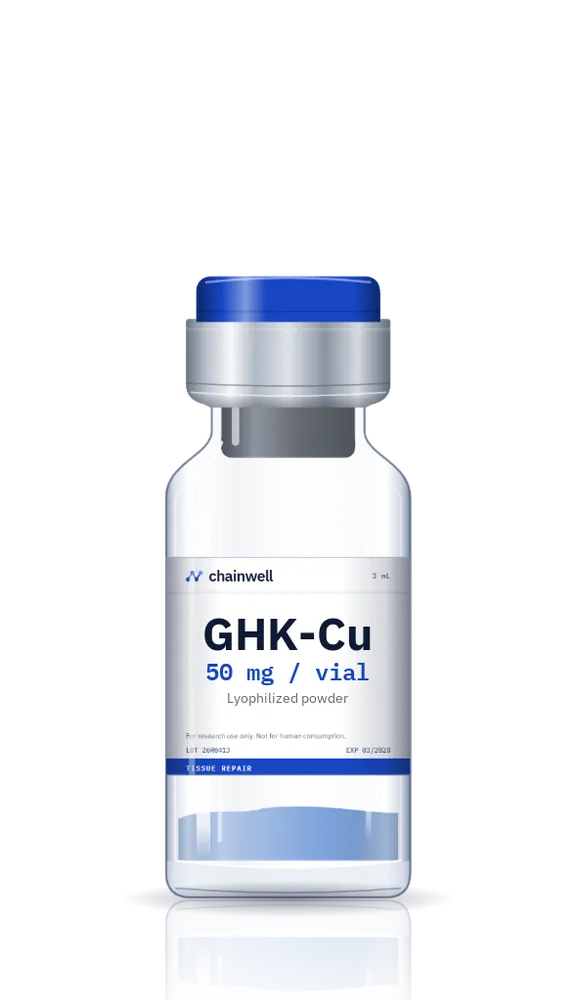
GHK-Cu is the tripeptide glycyl-L-histidyl-L-lysine bound to a copper ion. It was identified in human plasma in 1973, and its concentration there falls with age, which is what first drew ageing and skin researchers to it. It is studied for collagen and elastin synthesis, tissue remodelling and wound models, and is the peptide most associated with skin research. The bound copper turns the powder blue, so a blue cake is the first quality check for any GHK-Cu vial; a white one suggests the copper is missing.
We stock GHK-Cu in 50mg and 100mg vials, and in the GHK-Cu Starter Kit with bacteriostatic water and a syringe for a first order.
GLOW and KLOW Peptide Blends
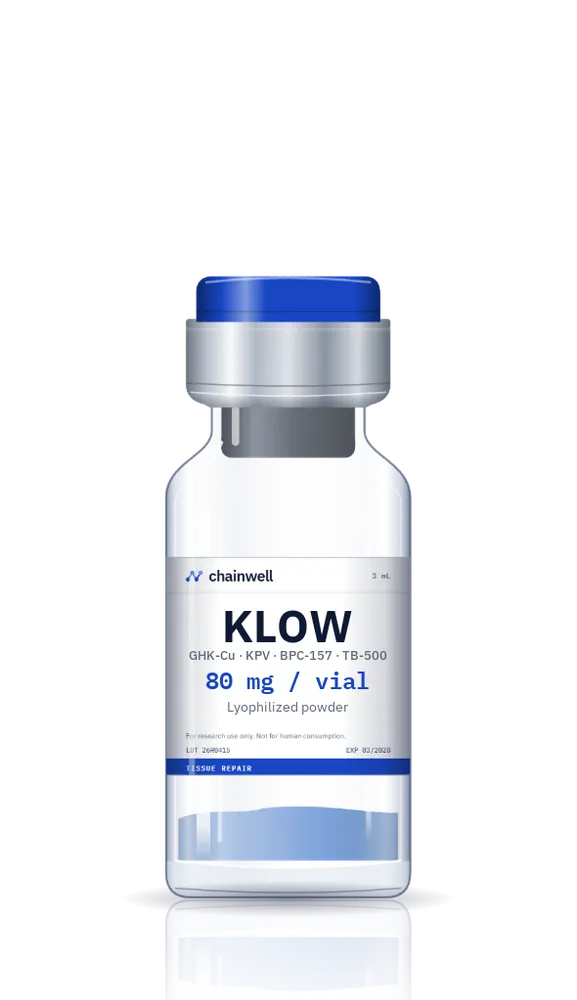
For protocols that pair GHK-Cu with repair peptides, the blends put them in one vial. GLOW holds GHK-Cu, BPC-157 and TB-500 in a 70mg vial, most of it GHK-Cu. KLOW contains the same three plus KPV in an 80mg vial, so the difference between GLOW and KLOW is that single anti-inflammatory tripeptide. KLOW also sits in our tissue repair peptides, alongside BPC-157 and TB-500 as single vials.
Glutathione
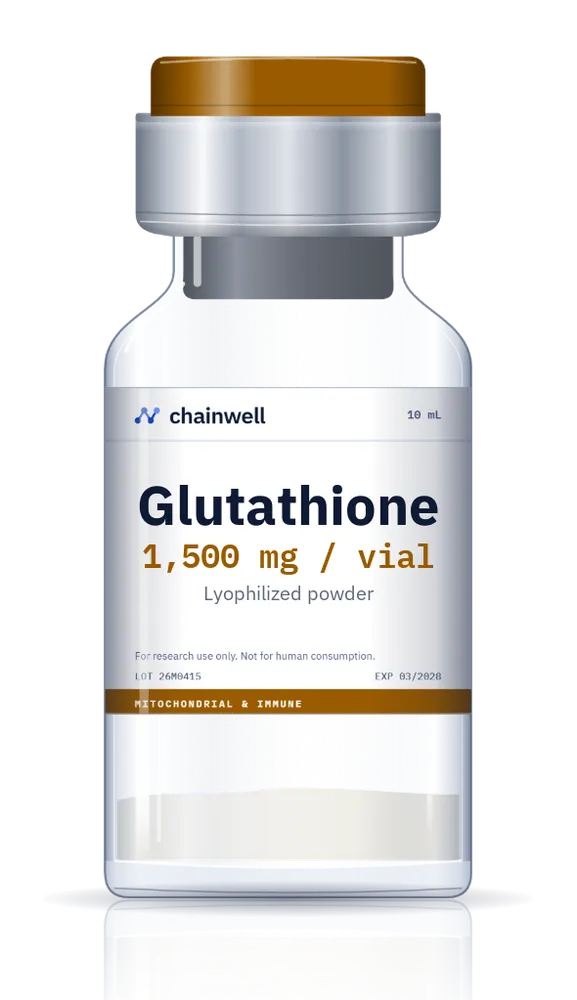
Glutathione is the tripeptide glutamate-cysteine-glycine, present at high concentrations in almost every cell as the main internal antioxidant. It is a standard reagent in oxidative stress research and is also studied for its role in melanin production, which is why it is so often grouped with skin compounds. Its purity also reflects how much is still in the active reduced form, so the lot certificate matters. It comes as a 1,500mg fill in a 10 mL vial.
Single Peptides, Blends or a Bundle?
For skin research focused on the copper peptide alone, GHK-Cu as a single vial gives full control over concentration. For combined repair and skin protocols with a set ratio, GLOW or KLOW. For the same idea as separate vials with supplies included, the Radiance Bundle packs GHK-Cu, KPV and BPC-157 with water and syringes. Our peptide calculator works out concentration for any of them.
Buying Skin Peptides in Australia
Every lot is tested by an independent laboratory for identity and purity, and blends are verified for every component. Check any lot on our COA lookup page. Orders paid before 3pm AEST on a business day ship the same day by tracked standard or express post, to Sydney, Melbourne, Brisbane, Perth, Adelaide and regional addresses. These are research compounds, not cosmetic products: all are for laboratory research use only and are not approved by the TGA for any therapeutic or cosmetic use.
Skin & Cellular product comparison
| Product | Sizes | Form | Container | Price |
|---|---|---|---|---|
| GHK-Cu | 50 mg, 100 mg | Lyophilized powder | 3 mL glass vial | $49 to $79 |
| KLOW | 80 mg | Lyophilized powder | 3 mL glass vial | $139 |
| GLOW Peptide | 70 mg | Lyophilized powder | 3 mL glass vial | $199 |
| Glutathione | 1,500 mg | Lyophilized powder | 10 mL glass vial | $69 |
Skin & Cellular FAQ
What is GHK-Cu copper peptide?
+
GHK-Cu is the tripeptide glycyl-L-histidyl-L-lysine bound to copper. It was found in human plasma in 1973 and is studied for collagen synthesis, tissue remodelling and skin research. The copper gives it a blue colour.
Why is my GHK-Cu blue?
+
The copper ion in GHK-Cu gives the powder and the solution a blue colour, which is normal and expected. A GHK-Cu vial with a white cake would suggest the copper complex is missing, so check the lot against its certificate of analysis.
What is the difference between GLOW and KLOW?
+
GLOW is a 70mg blend of GHK-Cu, BPC-157 and TB-500. KLOW is an 80mg blend of the same three plus KPV. The addition of KPV is the only difference.
Can I use these peptides on skin?
+
No. Chainwell Peptide supplies GHK-Cu, the blends and glutathione strictly for laboratory research. They are not cosmetic products and are not approved by the TGA for human use.