Glutathione Side Effects by Route
Glutathione is a tripeptide of glutamate, cysteine and glycine that nearly every cell makes for itself. Reduced glutathione (GSH) is the active form, and L-glutathione is simply the natural form's full name, so searches for reduced glutathione side effects and L-glutathione side effects are asking about the same molecule. For the chemistry, see our explainer on what glutathione is and how it works.
| Route | Key study or source | What was reported |
|---|---|---|
| Oral | Richie et al., European Journal of Nutrition, 2015 (54 adults, 6 months) | Blood glutathione stores rose at both 250 and 1,000 mg per day |
| Oral | Weschawalit et al., Clinical, Cosmetic and Investigational Dermatology, 2017 (12 weeks) | No serious adverse effects; well tolerated |
| Inhaled (nebulised) | Marrades et al., American Journal of Respiratory and Critical Care Medicine, 1997 | Major airway narrowing, cough and breathlessness in people with mild asthma |
| Intravenous (trial) | Hauser et al., Movement Disorders, 2009 (21 patients, 4 weeks) | Well tolerated; adverse events similar to placebo |
| Intravenous (compounded products) | FDA alerts, 2019 and 2026 | Fever, chills, shock and sepsis-like reactions linked to endotoxin-contaminated glutathione |
Oral Glutathione: What the Trials Found
The largest controlled oral trial is Richie and colleagues' six-month, double-blind, placebo-controlled study of 54 non-smoking adults taking 250 or 1,000 mg per day. Glutathione stores in blood, red cells, plasma and lymphocytes rose at both amounts, with increases of roughly 30 to 35% in blood compartments at the higher amount by six months.
Not every oral study found an effect. Allen and Bradley (Journal of Alternative and Complementary Medicine, 2011) gave 500 mg twice daily for four weeks and found no change in glutathione status or oxidative stress markers. In the skin study by Weschawalit and colleagues, women took 250 mg per day of reduced or oxidised glutathione for 12 weeks; the authors reported no serious adverse effects and described both forms as well tolerated.
In short, the published oral trials show a benign safety profile over weeks to months, with debate focused on whether oral glutathione is absorbed at all rather than on harm. Our article on glutathione for skin and what the lightening studies measured covers the dermatology results.
Inhaled Glutathione and Asthma
The clearest documented side effect of glutathione is respiratory. Marrades and colleagues gave nebulised glutathione (600 mg in saline) or placebo to eight people with mild asthma in a randomised, double-blind crossover trial. Glutathione caused major airway narrowing, with an average FEV1 fall of 19% and a 61% rise in airway resistance, and several patients developed cough or breathlessness. The falls correlated with sensitivity to metabisulfite, pointing to sulfur-containing breakdown products as a likely trigger.
That finding is the main reason reviews single out asthma when discussing nebulised glutathione.
Intravenous Glutathione: Trials Versus Contaminated Products
In a controlled setting, IV glutathione has been tolerated. Hauser and colleagues randomised 21 people with Parkinson's disease to 1,400 mg of IV glutathione or placebo three times a week for four weeks; there were no withdrawals for adverse events, and reported events were similar in both groups. Efficacy was not shown.
The serious IV reactions on record come from product quality. In 2019 the US FDA warned compounders not to use L-glutathione powder distributed by Letco Medical after seven patients who received compounded IV glutathione developed symptoms consistent with endotoxin exposure, and FDA testing found excessive endotoxin. In August 2026 the FDA reported at least 30 patients with fever, chills, pain, dizziness, signs of shock and sepsis-like symptoms, some hospitalised, after IV glutathione compounded from a single lot of dietary supplement grade glutathione supplied by Medisca. The FDA reminded compounders that dietary supplement grade ingredients should not be used to make injectable drugs.
That second case carries the key lesson of this whole topic: the grade of the material, not the molecule, caused the harm.
Regulator Warnings on Injectable Skin Lightening Glutathione
- US FDA (2015). The FDA warned consumers that it has not approved any injectable drugs for skin whitening or lightening, noting that such products often contain glutathione and pose a potentially significant safety risk.
- Philippine FDA (Advisory 2019-182). Warned against injectable glutathione for skin lightening, listing possible toxic effects on the liver, kidneys and nervous system and the possibility of Stevens-Johnson syndrome, and noting that no published clinical trials had evaluated injectable glutathione for lightening.
- Australia. In 2020 the Department of Health told the ABC that the TGA "has not considered the use of glutathione for skin lightening/whitening purposes", and that no application had been made for it as a permitted indication.
Sonthalia and colleagues' 2016 review in the Indian Journal of Dermatology, Venereology and Leprology reached a similar view: plausible biology, weak clinical evidence, and a need for larger controlled trials before any systemic use for lightening could be supported.
What to Avoid With Glutathione: What the Safety Literature Points To
People search for what to avoid when taking glutathione. We do not give personal health advice, but the published safety record points to a consistent set of risk factors:
- Nebulised glutathione in people with asthma, based on the Marrades trial.
- Supplement grade material in anything injectable, based on the 2026 FDA alert.
- Injectable skin lightening products of unknown source, which no regulator above has approved.
- Unverified purity. Reduced glutathione oxidises to GSSG in solution over time, so an old or poorly stored preparation is not the compound on the label.
Anyone considering glutathione for their own health should speak with a doctor or pharmacist.
Glutathione as a Research Reagent
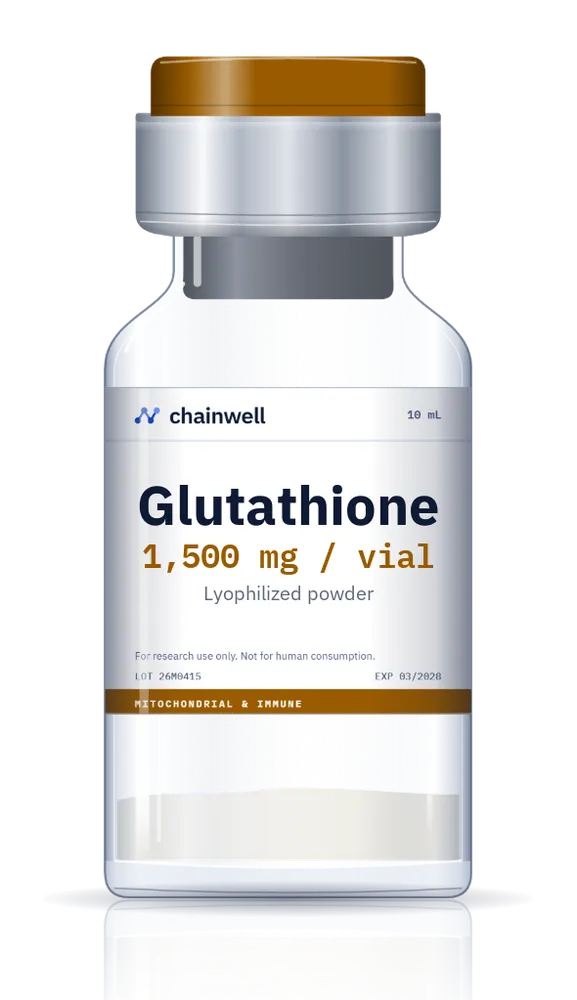
In the lab, glutathione is a standard reagent for oxidative stress, redox signalling and detoxification enzyme research. Our 1,500 mg vial is reduced L-glutathione, tested by an independent laboratory for identity by mass spectrometry and purity by HPLC, with the certificate matched to the vial on our COA lookup. It is not sterile and not an injectable product. Store it frozen at minus 20 °C unopened, and refrigerate solutions and use them within 28 days, since GSH oxidises in water. Related mitochondrial research compounds include NAD+ and SS-31, and the wider range sits in our skin and cellular research compounds.
Chainwell Peptide sells glutathione for laboratory research use only. It is not for human or veterinary use.
Frequently asked questions
What are the side effects of glutathione?
+
It depends on the route. Oral glutathione was well tolerated in randomised trials of up to six months. Nebulised glutathione caused significant airway narrowing in people with mild asthma. IV glutathione was tolerated in a controlled trial, but contaminated compounded products caused fever, chills and sepsis-like reactions in patients reported to the US FDA.
Are reduced glutathione side effects different from L-glutathione side effects?
+
No. L-glutathione is the natural form of glutathione, and reduced glutathione (GSH) is its active form, so both names describe the same molecule. Differences in reported side effects come from the route, the amount and the quality of the product, not from the name on the label.
Is injectable glutathione for skin lightening safe?
+
Regulators have warned against it. The US FDA has not approved any injectable skin lightening drug, the Philippine FDA listed possible liver, kidney and nervous system toxicity and Stevens-Johnson syndrome, and the TGA has not considered glutathione for skin lightening. No published clinical trial has established its safety for that purpose.
What should be avoided with glutathione according to studies?
+
The safety literature flags nebulised glutathione in people with asthma, supplement grade glutathione in injectable preparations, and injectable skin lightening products of unknown origin. These findings come from a 1997 asthma trial and FDA alerts in 2019 and 2026. For personal health questions, consult a doctor or pharmacist.