SLU-PP-332 is not a peptide
Search volume for "slu pp 332 peptide" is high, but the term is wrong. SLU-PP-332 has no amino acids. It is an acyl hydrazone built from 4-hydroxybenzoic hydrazide and 2-naphthaldehyde, with the formula C18H14N2O2, a molecular weight of about 290 and CAS number 303760-60-3. For comparison, the 16-residue MOTS-c peptide is roughly seven times heavier. The "SLU" is Saint Louis University, where the Burris lab did the medicinal chemistry.
It ends up in peptide catalogues because the people researching it are the same people researching mitochondrial and metabolic peptides. That is a sensible grouping for research, but it means some suppliers describe it with peptide language that does not fit. Chemistry matters for handling: a small aromatic molecule behaves differently in solution from a peptide, and solubility, not enzymatic breakdown, is usually the practical constraint.
The target: estrogen-related receptors
Despite their name, estrogen-related receptors do not bind estrogen. ERR alpha, beta and gamma are orphan nuclear receptors that control genes for mitochondrial biogenesis, oxidative phosphorylation, fatty acid oxidation and the Krebs cycle. They are essential for skeletal muscle to adapt to aerobic training, which is why an ERR agonist is a logical exercise mimetic candidate.
SLU-PP-332 is a pan-agonist: it activates all three ERRs, with its highest potency at ERR alpha. The Burris group showed that its effect on exercise capacity depended on ERR alpha specifically. That distinguishes it from other exercise mimetic targets such as AMPK (activated by AICAR and, indirectly, MOTS-c) and PPAR delta.
What the mouse studies found
The published efficacy evidence comes from a small group of papers, all from Burris and collaborators, all in mice or cells:
- Billon et al., ACS Chemical Biology, 2023. In a skeletal muscle cell line, SLU-PP-332 increased mitochondrial function and respiration. In mice it increased type IIa oxidative muscle fibres, switched on an ERR alpha-dependent acute aerobic exercise gene programme, and extended treadmill running time and distance.
- Billon et al., Journal of Pharmacology and Experimental Therapeutics (online 2023, volume 388, 2024). In diet-induced obese mice and leptin-deficient ob/ob mice, it increased energy expenditure and fatty acid oxidation, reduced fat mass accumulation and improved insulin sensitivity.
- Wang et al., American Journal of Pathology, 2023. ERR agonism reversed mitochondrial dysfunction and inflammation in the ageing mouse kidney.
So does SLU-PP-332 work? In mice, on the endpoints measured, yes. That is where the evidence currently ends.
No human trials, yet
No human study of SLU-PP-332 has been published, and a search of ClinicalTrials.gov at the time of writing returns no registered trials. When the University of Florida (where Burris now works) announced the metabolic syndrome results in 2023, it described the next steps as refining the structure toward a drug candidate and further animal testing, not human trials.
The lab has since moved on in a telling direction. A 2026 paper in JPET introduced SLU-PP-915, a chemically distinct ERR pan-agonist, and described SLU-PP-332 as lacking oral bioavailability. In mice, SLU-PP-332 was given by intraperitoneal injection. That matters for anyone designing an oral-route study with the capsule format: the originating lab's own position is that oral exposure to this molecule is poor, so exposure should be measured rather than assumed.
SLU-PP-332 side effects: what is and is not known
Searches for slu pp 332 side effects outnumber most other SLU queries, and the honest answer is that nobody knows the side effects in people. The researchers reported no severe side effects in the mouse metabolic study. No formal toxicology package, human pharmacokinetics or long-term animal safety study has been published.
Some unknowns follow from the biology. ERRs are highly active in heart muscle, kidney and brown fat, all high-energy tissues, and long-term effects of pushing those receptors have not been reported. Increased energy expenditure and fat oxidation also mean body temperature and food intake are sensible variables to record in any animal design. Our view: SLU-PP-332 is a good tool compound for asking questions about ERR biology, and it should be treated as one, not as a finished "exercise pill".
SLU-PP-332 in Australia
There is no approved medicine containing SLU-PP-332 in Australia or anywhere else, and it is not listed on the ARTG. Check the current Poisons Standard before any use outside a laboratory. Chainwell Peptide supplies it for laboratory research only, not for human or veterinary use, and nothing on this page is dosing advice.
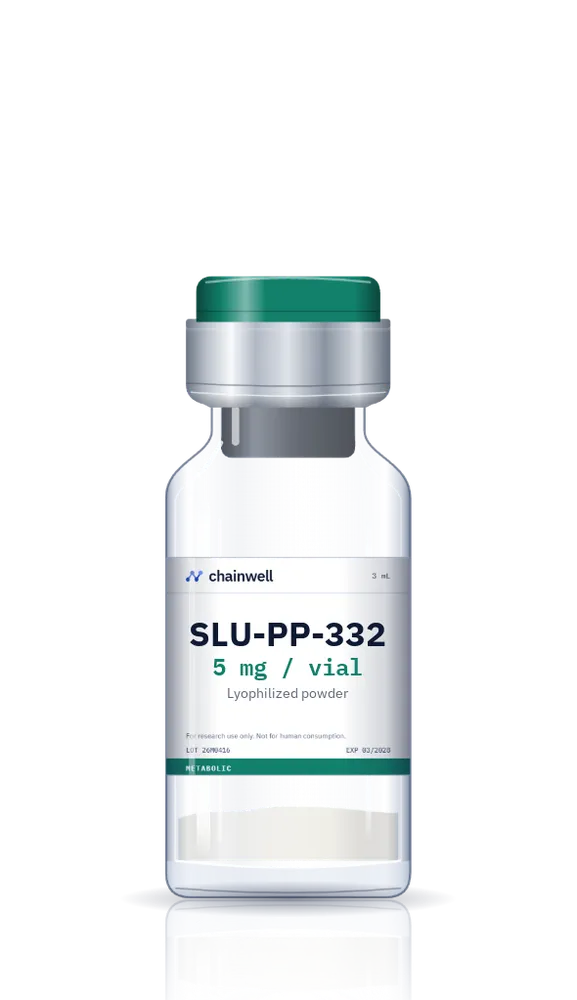
We stock two formats: a 5 mg lyophilised vial and a 60-capsule pack. Every lot is tested by an independent laboratory, and the lot number on the vial or pack matches its report on the COA lookup; our quality testing page explains the methods. Orders paid before 3pm AEST on a business day are dispatched the same day by tracked post, Australia-wide.
Metabolic researchers often study SLU-PP-332 beside compounds acting on other nodes: 5-Amino-1MQ, an NNMT inhibitor, NAD+ 500 mg and the triple agonist retatrutide. For the mitochondrial peptide side of the exercise mimetic story, read our summary of MOTS-c research, or browse the mitochondrial compounds category.
Frequently asked questions
Is SLU-PP-332 a peptide?
+
No. SLU-PP-332 is a small synthetic molecule (C18H14N2O2, molecular weight about 290) with no amino acids. It is an acyl hydrazone that activates the estrogen-related receptors. It is sold by peptide suppliers because it is researched alongside mitochondrial and metabolic peptides such as MOTS-c.
What are the SLU-PP-332 side effects?
+
Side effects in humans are unknown because it has never been tested in people. In the published mouse studies, researchers reported no severe side effects. No formal toxicology or long-term safety study has been published, and effects on high-energy tissues such as heart and kidney over long periods have not been examined.
Has SLU-PP-332 been tested in humans?
+
No. All published data on SLU-PP-332 come from cell and mouse studies by Thomas Burris and collaborators. At the time of writing, ClinicalTrials.gov lists no registered human trials, and the lab's newer work focuses on a different compound, SLU-PP-915.
Is SLU-PP-332 orally bioavailable?
+
According to its developers, no. A 2026 JPET paper from the Burris lab describes SLU-PP-332 as lacking oral bioavailability, and the mouse studies gave it by intraperitoneal injection. The same paper introduced SLU-PP-915 as an orally active alternative. Oral-route research designs should measure exposure rather than assume it.
Can you buy SLU-PP-332 in Australia?
+
SLU-PP-332 is not an approved medicine in Australia and is not on the ARTG. Chainwell Peptide supplies it for laboratory research only, as a 5 mg vial or 60 capsules, with each lot independently tested and dispatched from within Australia. Check the current Poisons Standard before any non-laboratory use.