
What Is the BPC-157 and TB-500 Blend?
BPC-157/TB-500 is a pre-mixed research blend of two separate peptides, lyophilized together so a single vial holds both. It is sold as a blend, a stack or a combo depending on who is selling it, but the product is the same: two compounds from two unrelated parent proteins, in one vial.
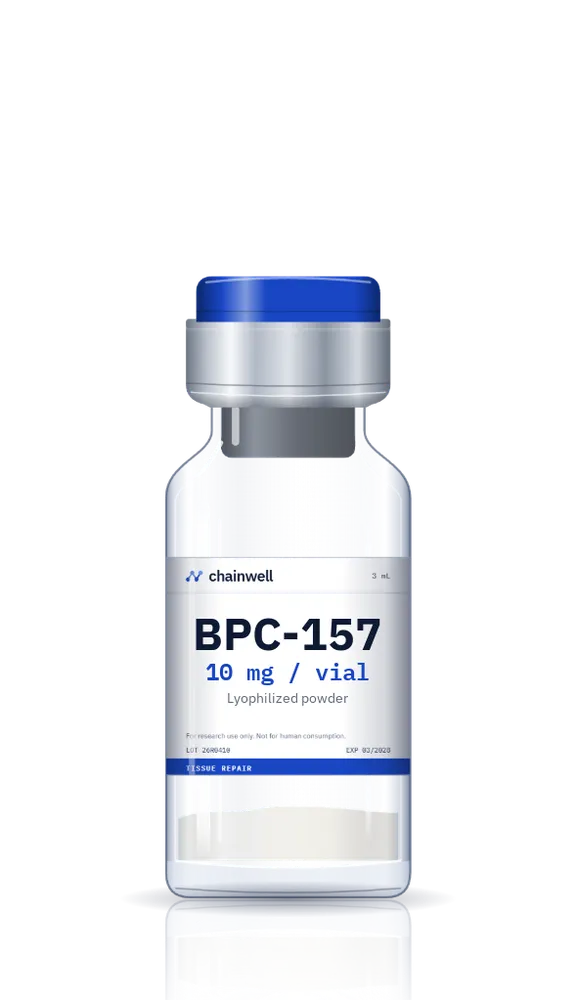
BPC-157 is a pentadecapeptide, 15 amino acids long, taken from a protein found in human gastric juice. Most of its research record comes from Professor Predrag Sikiric's group at the University of Zagreb, largely in rat models of tendon, gut and soft tissue injury. Read more on our BPC-157 peptide page.
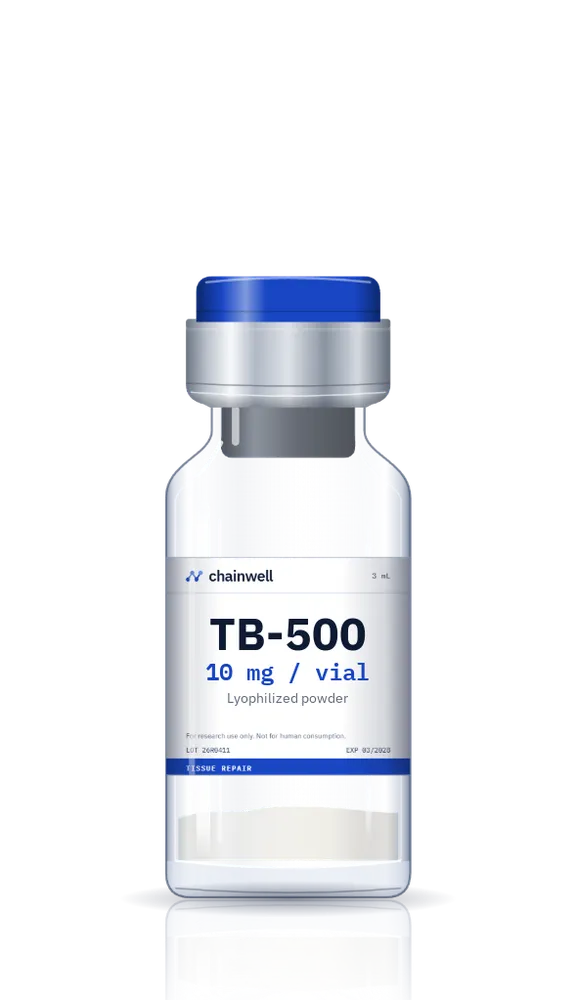
TB-500 is a synthetic fragment of thymosin beta-4, a 43 amino acid protein first isolated from calf thymus tissue and present in almost every cell type. Thymosin beta-4 binds actin, the protein that forms the cell's internal scaffolding, and it is studied for its role in cell migration and the formation of new blood vessels. See the single compound on our TB-500 peptide page.
Why BPC 157 and TB 500 Are Researched Together
BPC-157 and TB-500 turn up in the same studies because they are thought to act through different pathways. Published work on BPC-157 points to growth factor and nitric oxide signalling, including increased outgrowth and migration of tendon fibroblasts in cell culture. Work on thymosin beta-4 centres on actin regulation, cell migration and angiogenesis, including a widely cited 2004 study in Nature on cardiac cells in mice. Two mechanisms, one tissue repair question.
Almost all of this research is preclinical: cell culture and animal models. Neither peptide is an approved medicine in Australia, and the combination has not been through clinical trials. You can browse the papers behind each compound in our BPC-157 research library and thymosin beta-4 research library.
BPC-157 + TB-500 10mg Blend Vial
The Chainwell Peptide blend holds 10mg of combined peptide as a white freeze-dried cake in a 3 mL clear glass vial. It uses the same vial, stopper and blue flip-off cap as our single BPC-157 10mg vial and TB-500 10mg vial, so it slots into the same storage and handling routine. The label reads BPC-157 + TB-500 Blend with the fill, lot number and expiry.
Supplying the blend dry keeps both peptides stable in transit and on the shelf. Nothing is pre-dissolved, so you set the final concentration when you reconstitute.
BPC 157 TB 500 Blend or Separate Vials?
This is the question we are asked most about the blend, and our answer is simple. Order the blend only when your protocol already specifies BPC-157 and TB-500 together at a fixed ratio. It halves the vials, reconstitutions and lot numbers you track, and both compounds share one certificate of analysis.
If your study compares BPC-157 and TB-500, or needs to adjust one without the other, buy separate vials. Once two peptides share a vial, you cannot change the ratio or measure either one on its own. Our BPC-157 vs TB-500 guide sets out the differences between the two compounds in detail.
| BPC-157 TB-500 blend | Separate vials | |
|---|---|---|
| Vials to reconstitute | One | Two |
| Ratio | Fixed at manufacture | Set by you |
| Certificates of analysis | One, covering both peptides | One per compound |
| Best for | Protocols that use both at a set ratio | Comparison studies, adjustable ratios |
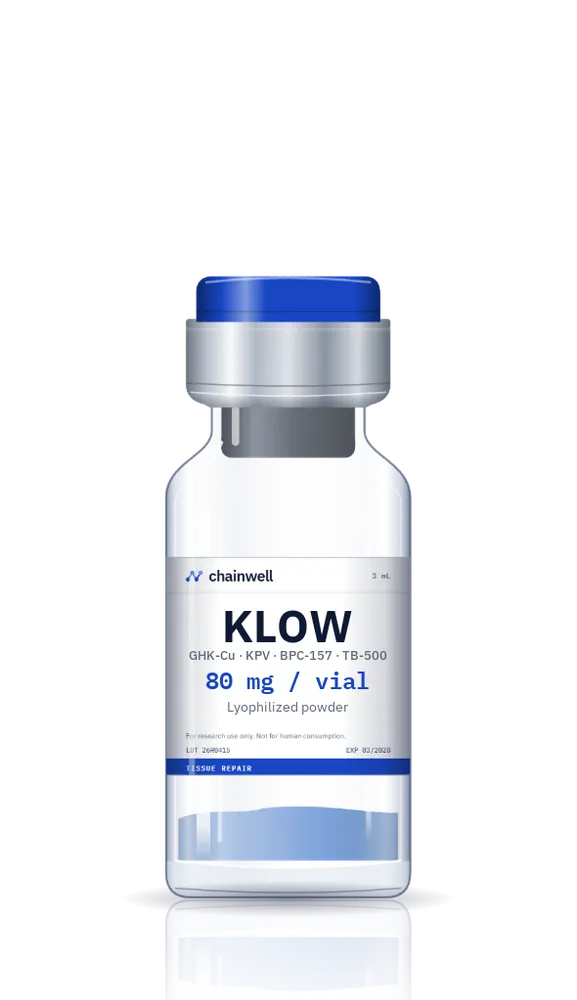
Looking for BPC-157 and TB-500 with GHK-Cu? KLOW combines GHK-Cu, KPV, BPC-157 and TB-500 in one 80mg vial.
BPC-157 TB-500 Capsules
We supply the blend as a lyophilized vial only, not as capsules. BPC-157 is unusual among research peptides because published studies describe it as stable in gastric juice, which is why it can be supplied in an oral solid format. The same stability has not been established for TB-500. If your research design calls for an oral format, the BPC-157 capsules are the option we stock; for TB-500, use the vial.
How to Reconstitute the BPC-157 + TB-500 Blend
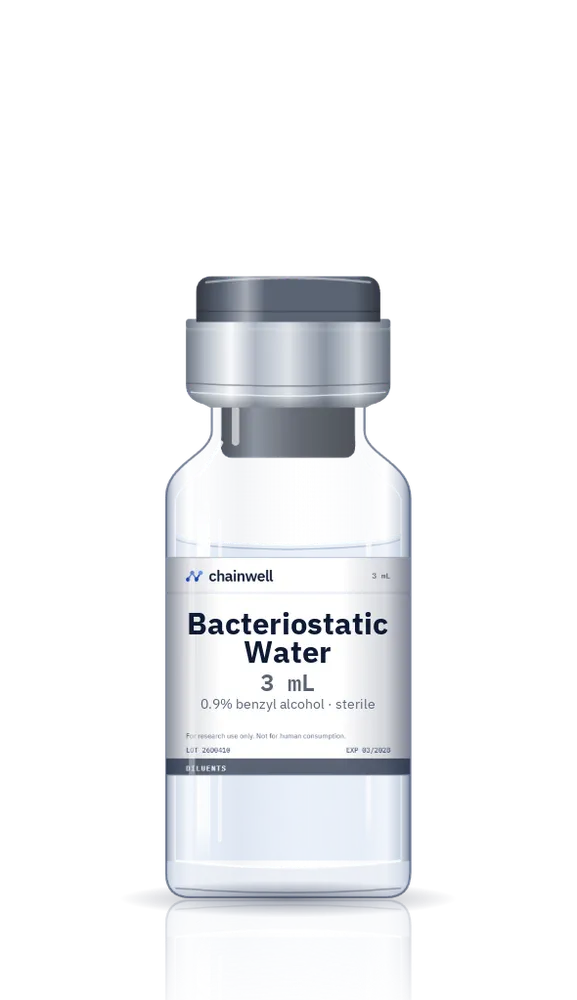
The blend is reconstituted the same way as any single lyophilized peptide. Let the vial reach room temperature, wipe the stopper with an alcohol swab, and add bacteriostatic water slowly down the inside wall of the vial with a U-100 insulin syringe. Swirl gently until the solution is clear. Do not shake it, as that can damage the peptide chains.
Keep the reconstituted vial at 2 to 8 °C, protected from light, and use it within 28 days. Our peptide reconstitution guide and calculator works out the concentration per mL for a 10mg vial at the volume of water you add.
Lab-Tested BPC 157 and TB 500 With a Lot-Matched COA
A blend is harder to verify than a single peptide: the report needs to confirm both compounds are present, not just one. Every Chainwell Peptide blend lot is sent to an independent laboratory before release and tested for identity and purity. A lot that does not meet specification is not sold.
The lot number printed on your vial links it to its report on our COA lookup page, and you can check it before you order. Our guide on how to read a certificate of analysis explains each result.
Buy BPC 157 and TB 500 in Australia
Chainwell Peptide supplies the BPC 157 TB 500 blend for sale in Australia to laboratories, universities and independent researchers, packed and shipped from within Australia. Before you buy from any supplier, check that the listing names both peptides and the total fill, that the vial carries a lot number, and that the certificate for that lot is available before you pay.
- Same-day dispatch on orders paid before 3pm on a business day.
- Australia-wide delivery to Sydney, Melbourne, Brisbane, Adelaide, Perth, Hobart, Darwin and regional addresses, by standard or express post.
- PayID or bank transfer, with your order number as the payment reference.
- Tracked orders you can follow on our order tracking page.
The current price is shown at the top of this page, with GST included. The rest of our tissue repair research peptides ship the same way, and our shipping policy covers delivery times.
BPC-157 TB-500 Blend Specifications
| Compounds | BPC-157 (body protection compound 157) and TB-500 (thymosin beta-4 fragment) |
|---|---|
| Class | Tissue repair research peptide blend |
| Fill | 10mg combined peptide per vial |
| Form | Lyophilized (freeze-dried) powder |
| Container | 3 mL clear glass vial, rubber stopper, blue flip-off cap |
| Label | Product, fill, lot number, expiry, research-use statement |
| Testing | Identity and purity by an independent laboratory, per lot |
| Diluent | Bacteriostatic water, sold separately |
| Storage | Minus 20 °C long term, 2 to 8 °C short term, protect from light |
| Shipping | Standard or express post, Australia-wide |
Storing the BPC 157 TB 500 Blend
Store the unopened vial frozen at minus 20 °C for the longest shelf life, or at 2 to 8 °C for work planned within a few weeks, in its carton away from light. Once reconstituted, keep it refrigerated and use it within 28 days. Our peptide storage guide covers freezer, fridge and transport handling.
Research Use Only
Neither BPC-157 nor TB-500 is approved by the Therapeutic Goods Administration for any therapeutic use. Chainwell Peptide sells this blend strictly for laboratory and in vitro research. It is not for human or veterinary use, and we do not provide dosing advice. Both compounds also appear on the World Anti-Doping Agency prohibited list. By ordering you agree to our terms and conditions and research use only statement.
Wolverine Blend tools and guides
- BPC-157 and TB-500 Blend Dosage Calculator (Wolverine Blend): bac water, concentration and U-100 syringe units
- BPC 157 vs TB500: How the Two Tissue Repair Peptides Differ
- BPC 157 Side Effects: What the Animal and Human Evidence Shows
- What Is BPC 157? The Gastric Peptide Behind the Research
- Is BPC 157 Legal in Australia? Scheduling, Prescriptions and the TGA
- What Is TB 500? The Thymosin Beta-4 Fragment Explained
- GLOW vs KLOW: The Glow Stack Peptide and the KLOW Stack Compared
Wolverine Blend (BPC-157 + TB-500) FAQ
What is BPC-157/TB-500?
+
BPC-157/TB-500 is a research blend of two peptides in one vial. BPC-157 is a 15 amino acid peptide derived from a gastric juice protein, and TB-500 is a synthetic fragment of thymosin beta-4. Chainwell Peptide supplies the blend as a 10mg lyophilized vial for laboratory research.
Where can I buy BPC 157 and TB 500 in Australia?
+
You can buy BPC 157 and TB 500 in Australia from Chainwell Peptide, either as the 10mg blend or as separate 10mg vials. Every lot carries a lot number matched to an independent certificate of analysis, and orders paid before 3pm on a business day ship the same day by standard or express post.
Should I buy the BPC-157 TB-500 blend or separate vials?
+
Buy the blend when your protocol already uses both peptides at a fixed ratio, since it means one vial, one reconstitution and one certificate. Buy separate BPC-157 and TB-500 vials for comparison studies or when you need to change the ratio, because a blend cannot be split once mixed.
How do you reconstitute the BPC-157 + TB-500 blend?
+
Add bacteriostatic water slowly down the inside wall of the vial with a sterile syringe, then swirl gently until clear, without shaking. Store the reconstituted blend at 2 to 8 °C, protected from light, and use it within 28 days. Our reconstitution guide includes a concentration calculator for a 10mg vial.
Do you sell BPC-157 TB-500 capsules?
+
No. The blend is supplied as a lyophilized vial only. BPC-157 is described in published research as stable in gastric juice, which is why we offer BPC-157 capsules on their own, but that stability has not been established for TB-500, so we do not sell a TB-500 or blended capsule.
Is the BPC 157 TB 500 blend lab tested?
+
Yes. Every blend lot is tested by an independent laboratory for identity and purity before release, confirming both peptides are present. The lot number on your vial matches its certificate of analysis, which you can check on our COA lookup page before or after you order.